
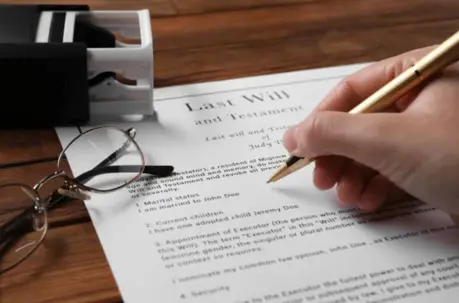
Family members don’t automatically have the right to divide a loved one’s property just because there’s no will. But a death without a will doesn’t mean every bank account, vehicle, or piece of property must go through court, either.
For families facing Michigan probate without a will, the first task is identifying what the person owned, how each asset was titled, and whether a beneficiary was named. Those details determine whether probate is needed at all and which property Michigan law controls.
What Dying Without a Will Means in Michigan
When someone dies without a valid will, they die intestate. Michigan’s intestate succession laws then determine who receives probate property. Not what relatives believe the deceased would have wanted, but a fixed inheritance order based on surviving family relationships.
The Michigan Estates and Protected Individuals Code governs this process. If the deceased lived in Kalamazoo County or owned property requiring administration there, the Kalamazoo County Probate Court handles the proceedings. The right filing path depends on the estate’s assets, debts, and family circumstances.
A will matters, but its absence isn’t the whole story. If the deceased used joint ownership, beneficiary designations, or a trust, the estate may have very little probate property regardless.
Which Assets Go Through Probate
Probate assets are property titled solely in the deceased person’s name with no beneficiary designation or other automatic transfer method. Non-probate assets pass under their own ownership or beneficiary rules and bypass intestate succession entirely. These can include jointly owned property with rights of survivorship, payable-on-death accounts, life insurance proceeds, retirement accounts with valid beneficiaries, and property held in a trust.
Records to review early:
- Deeds to see how real estate was titled
- Bank and investment accounts to identify joint owners and payable-on-death beneficiaries
- Life insurance and retirement records to confirm beneficiary designations
- Vehicle titles to identify the registered owner or co-owner
- Trust documents to determine whether assets were transferred into a trust
These records matter because an asset can look like part of the estate while legally passing to someone else. A beneficiary designation generally controls an account or policy even if another relative believes it should go through probate.
Michigan also provides small estate procedures for qualifying estates. For a person who died in 2026, the relevant threshold is $53,000, subject to statutory requirements and the specific procedure being used. Hitting that dollar figure alone doesn’t resolve title issues, debts, or disputes about who is entitled to property.
Who Inherits When There’s No Will
Michigan’s intestate succession follows a statutory family order, but the surviving spouse’s share depends on whether there are descendants and whether those descendants are also the spouse’s. In some family structures the spouse receives the entire estate; in others, a statutory amount plus a portion of the remainder.
When descendants inherit, Michigan generally distributes their share by representation. A deceased child’s own children may step into that child’s place rather than the share disappearing from the family line.
If there’s no surviving spouse, descendants are first in line. Without descendants, the estate may pass to the deceased’s parents, then to siblings and their descendants, and then to more remote relatives under the statutory order. Adopted children are generally treated as children of their adoptive parents for inheritance purposes. Blended families, children from different relationships, children who predeceased the decedent, and questions about parentage can all shift the analysis significantly.
When the family tree is unclear, a relative can’t be located, or family members disagree, the probate court may need to make a formal determination of heirs. No one should assume the oldest child, the closest caregiver, or the person who paid funeral expenses automatically owns estate property. Those facts may matter to the administration, but they don’t override the inheritance rules.
How Probate Works, Step by Step
The process begins with a petition asking the probate court to open an estate or appoint someone to act for it. In an informal probate (used when the appointment and documents can be handled without a formal hearing), the register may appoint a qualified personal representative if the legal requirements are met.
The personal representative is the court-authorized person responsible for administering the estate. That could be a surviving spouse, adult child, another heir, or another qualified individual, but appointment follows Michigan’s priority rules based on the facts presented to the court.
The usual administration sequence:
- File the initial paperwork to request an appointment and identify interested persons
- Identify heirs and provide required notice to people with an interest in the estate
- Collect and protect assets by locating accounts, property, records, and insurance information
- Inventory and value property so the estate’s assets can be properly accounted for
- Address creditor claims before distributing remaining property to heirs
- Distribute and close the estate after debts, taxes, expenses, and court requirements are resolved
The personal representative manages estate property on behalf of the estate, not for personal use, and may need to open an estate account, preserve real estate, obtain valuations, keep records, and seek court authority for specific actions. Creditor claims are a major reason not to distribute property too early. Michigan generally requires notice to creditors, and claims are ordinarily subject to a four-month period after publication of notice; known creditors may have one month after receiving direct notice if that period ends later. A formal closing generally can’t occur until at least five months after the personal representative’s appointment, and the actual timeline can stretch further when real estate must be sold, tax issues arise, heirs disagree, assets are hard to locate, or creditor claims remain unresolved.
What to Do Before Distributing Property
Before selling a car, transferring a deed, closing an account, or dividing personal belongings, gather the records that show what exists and who may have a legal interest. Getting the paperwork in order early prevents conflict and helps determine whether probate is even required.
Information to gather:
- Death certificates for financial institutions, insurers, and court filings
- Account statements and titles for bank accounts, investments, vehicles, and real estate
- Debt and tax records for mortgages, loans, credit cards, and recent tax filings
- Possible estate planning documents, including any will, trust, or beneficiary paperwork
- Family information, including names, addresses, and relationships of possible heirs
Don’t distribute property based on a family agreement alone before confirming ownership, inheritance rights, debts, and the required procedure. An heir who receives money or property too soon may face pressure to return it if estate debts, taxes, or valid creditor claims later surface.
Legal guidance matters most when an estate includes real estate, substantial debt, property in another state, a blended family, disputed heirs, a missing relative, or uncertainty about whether a will exists. Our probate attorneys can evaluate the records and explain which duties apply to the person seeking appointment. Michigan’s intestacy rules provide a framework, but they don’t eliminate the work of identifying assets, resolving obligations, and completing the proper court process.